
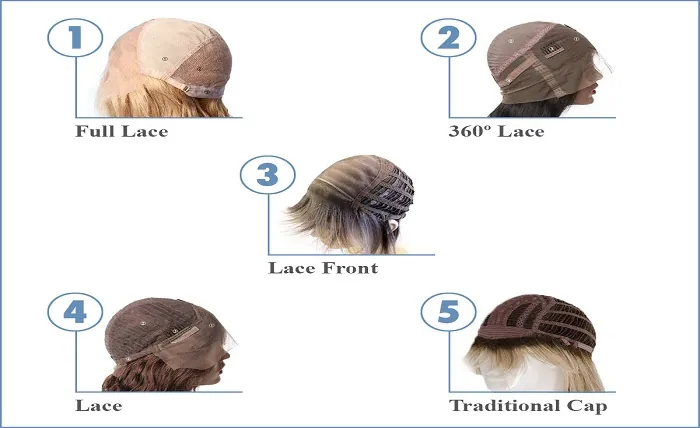
When you’re shopping for a wig, it’s easy to focus on length, color, and texture. But the part you don’t see at first glance—the cap construction—often matters even more. The cap affects comfort, breathability, styling options, and how natural the wig looks day to day. Choosing the right cap construction for your lifestyle can mean the difference between a wig you tolerate and one you love wearing.
Below, you’ll learn the most common cap types, who they’re best for, and how to match them to your routine, styling habits, and experience level.
1. Basic Cap (Traditional / Machine‑Made)
What it is:
A basic cap (often the most affordable) is usually machine‑sewn with wefts of hair attached to a closed cap. The top may have permatease (a bit of teased hair at the root) to add volume and hide tracks.
Best for you if:
- You want an everyday wig on a budget.
- You like volume at the crown instead of a super flat, “scalp” look.
- You don’t mind a fixed style and don’t need super versatile parting.
Lifestyle match:
Great for busy routines, quick throw‑on styles, and people who don’t want to spend a lot of time customizing. Think of it as a reliable everyday option, especially if you’re not focused on intricate parting or updos.
2. Lace Front Cap
What it is:
A lace front wig has sheer lace along the front hairline with hair individually hand‑tied into it. The rest of the cap is usually machine‑wefted or partially hand‑tied.
Pros:
- Very natural hairline, especially when tinted and cut properly.
- Enables off‑the‑face styling: ponytails, half‑up, and pushed‑back looks.
- Good balance of realism and price.
Cons:
- Requires some skill: cutting the lace, tinting, possibly melting.
- May need glue, gel, or spray if you prefer long‑lasting hold.
Lifestyle match:
Ideal if you like styling your hair away from your face and are willing to spend a bit of time on installation. Great for events, workdays when appearance matters, or anyone who enjoys learning lace techniques.
3. Full Lace and 360 Lace Caps
Full lace: The entire cap is lace with hand‑tied hair, allowing parting anywhere and very versatile styling (updos, braids, high ponytails).
360 lace: Lace around the perimeter (front, sides, back) with wefts in the middle. You get a natural hairline all around and options for lower ponytails and styled backs.
Pros:
- Maximum versatility for styling and parting.
- Most natural look from multiple angles (especially full lace).
Cons:
- Usually more expensive.
- Often need adhesive for best security.
- Require more time and care to maintain and install.
Lifestyle match:
Best for wig enthusiasts, performers, or those who love experimenting with many styles. Not ideal if you want a super quick, low‑maintenance morning routine.
4. Monofilament and Hand‑Tied Caps
Monofilament top/part: Features a thin, mesh‑like material with each hair hand‑tied so it looks like it’s coming from a real scalp at the top or part area.
Fully hand‑tied cap: Every hair across the entire cap is individually tied—soft, flexible, and very natural.
Pros:
- Realistic scalp illusion where the monofilament is placed.
- Very comfortable, especially fully hand‑tied caps (great for sensitive scalps).
- Hair moves more naturally.
Cons:
- Higher cost than basic machine‑made caps.
- Requires gentle handling due to delicate construction.
Lifestyle match:
Perfect if comfort is a top priority (e.g., medical hair loss, sensitive scalp) or you want natural‑looking parting with a soft, lightweight feel.
5. V Part and U Part Wig Caps
What they are:
V part and U part wigs have a V‑ or U‑shaped opening at the top of the cap where your own hair is left out. Instead of relying on lace or artificial scalp, your real hair and scalp create the part.
Pros:
- Extremely natural part and root area because it’s your own hair.
- No lace to cut, tint, or melt.
- Often glueless, using combs and straps instead of adhesive.
- Great for adding volume and length while keeping a realistic top.
Cons:
- Requires enough natural hair to leave out.
- Works best if your hair texture and color can match the wig.
Lifestyle match:
Ideal for people who:
- Want realistic results with less lace “work.”
- Prefer glueless installs and quick on/off.
- Enjoy blending their own hair for a more natural look.
6. Non‑Lace Caps (Headband, Half Wigs, and More)
Some wigs skip lace altogether and rely on clever design—like headband wigs, half wigs, and certain fully closed caps.
For example, styles similar to a no lace wet and wavy wig can be perfect for those who prioritize ease: throw on, adjust, and go, without worrying about lace customizing or adhesive.
Lifestyle match:
Great for workouts, casual days, or quick changes. Also ideal for beginners or anyone who doesn’t want to learn lace installation but still wants stylish hair.
7. Matching Cap Construction to Your Routine
Ask yourself a few questions:
- How much time do I want to spend getting ready?
- Minimal time: basic cap, headband wig, V part/U part.
- Moderate time: lace front or monofilament.
- Lots of styling time: full lace, 360 lace.
- Do I want to use glue or spray?
- Prefer no adhesives: look for glueless designs with straps, combs, bands, or drawstrings—like many V part wigs and some lace fronts.
- Don’t mind adhesive for longer wear: lace front, 360 lace, full lace.
- How important is parting versatility?
- Fixed part is fine: basic cap, some monofilament part wigs.
- Some flexibility: lace front with set part or mono‑top.
- Maximum flexibility: full lace, some 360 lace, and free‑part mono tops.
- How active is my lifestyle?
- Very active (gym, running, long days): secure glueless caps, headband wigs, V/U parts with good combs and straps.
- Moderate activity: lace fronts with or without light adhesive.
- Mostly low‑activity: any construction you’re comfortable maintaining.
8. Featured Product: A Practical, Lifestyle‑Friendly V Part Cap
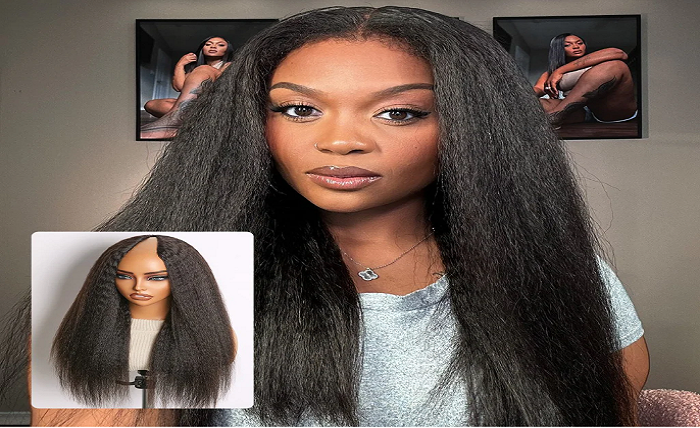
If you want a cap that balances realism, comfort, and low‑maintenance wear, a V part glueless design is an excellent choice. A good example is:
True Scalp Kinky Straight V Part Glueless Human Hair Wig – Flexi Fit & Drawstring
Why this cap works for many lifestyles:
V Part Construction:
- Lets you leave out a slim section of your own hair at the top, so your real scalp creates the part. This means no lace to cut or melt, and a very convincing, natural‑looking root area.
True Scalp Effect:
- The top is designed to mimic real scalp, enhancing the illusion where your hair and the wig meet.
Glueless, Flexi Fit & Drawstring:
- Combs, adjustable straps, and a drawstring allow you to wear it securely without glue, gel, or spray—perfect for daily use, quick installs, and edge protection.
Kinky Straight Texture:
- Looks like thick, blown‑out natural hair, making it easy to blend with many textured hair types that are stretched or silk‑pressed.
This type of cap is especially suitable if you want a natural everyday style without the learning curve that often comes with lace front or full lace wigs.
9. Style vs. Cap: Balancing Looks and Practicality
Finally, remember that cap construction and hairstyle are separate choices. You can find many textures and cuts across different cap types—from sleek straight to playful styles like a curly wig with bangs. The key is to decide which cap realistically fits your daily life, then choose the hair type and style you love within that category.
When you match your cap to your lifestyle—time, comfort, activity level, and skill—your wig becomes not just beautiful, but practical. That’s when you truly get the most out of every unit in your collection.